Mastering Game Development – In the ever-evolving world of game development, the quest to deliver immersive and engaging player experiences is a perennial goal. Achieving this involves a blend of technical expertise, creative vision, and a keen understanding of player expectations. This article delves into key strategies for game developers aiming to master this complex art, with a particular focus on integrating advanced peripherals like the thrustmaster joystick and Thrustmaster pedal to enhance realism and player engagement.
Mastering Game Development
Understanding Player Immersion
Immersion in gaming is the sensation of being ‘in the game,’ where players feel deeply connected to the virtual world. This is achieved through a combination of compelling storytelling, realistic graphics, responsive gameplay, and, crucially, intuitive controls. To master game development, understanding the psychology of immersion is essential. Players should feel that they realistically respond to their inputs. Their actions within the game have meaningful consequences, as do those in the virtual world.
Making use of services such as the best VPN for gaming can also mean you’re able to get the best gaming experience so is definitely something worth considering.
Leveraging Advanced Peripherals
To elevate immersion, incorporating advanced peripherals such as the Thrustmaster joystick and Thrustmaster pedal can make a significant difference, especially in simulation and racing games. These peripherals provide a level of control and realism that standard controllers cannot match.
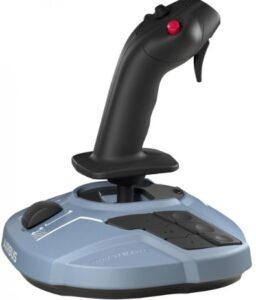
Thrustmaster Joystick: Renowned for its precision and build quality, it is ideal for flight simulators and space exploration games. Its ergonomic design and responsive controls allow for nuanced manoeuvres, making players feel like they are genuinely piloting an aircraft or spaceship. Developers can enhance this experience by ensuring their games support the full range of joystick features, such as adjustable resistance and programmable buttons.
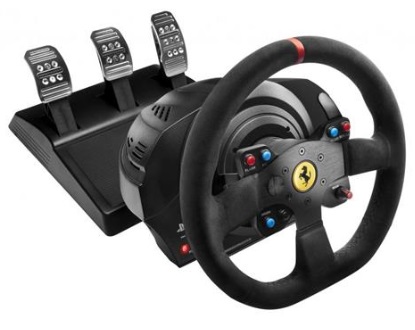
Thrustmaster Pedal: The Thrustmaster pedal complements the joystick perfectly in racing and flight simulation games. These pedals offer realistic resistance and accurate feedback and simulate the feel of actual vehicle controls. Integrating these pedals into your game can provide players with a more authentic driving or flying experience, enhancing the overall immersion.
Strategies for Integration
- Native Support and Calibration: Ensure your game offers native support for advanced peripherals. This means recognising the device when connected and allowing players to calibrate settings such as sensitivity and dead zones. Providing an intuitive calibration process will enable players to customise their controls for optimal performance.
- Customisable Control Schemes: Offer customisable control schemes that let players map functions to different buttons and pedals according to their preferences. This flexibility is crucial for players who may have specific needs or who are accustomed to certain setups. Customisable controls also enhance accessibility, allowing a broader range of players to enjoy your game.
- Feedback and Haptics: Utilise haptic feedback to enhance realism. For instance, the Thrustmaster joystick often comes with force feedback features that simulate the physical sensations of flying or driving. Integrating these features into your game can provide tactile responses to in-game events, such as turbulence or road texture, deepening the player’s immersion.
- Realistic Physics and Mechanics: Develop realistic physics and mechanics that match the precision of the peripherals. For flight simulators, this could mean accurately simulating aerodynamics and weather conditions. Racing games involve creating lifelike car handling and road surface interactions. The more realistic the simulation, the more the peripherals can shine in providing an authentic experience.
- Training and Tutorials: Include comprehensive training modules and tutorials to help players get accustomed to using advanced peripherals. Even experienced gamers might need time to adapt to the nuances of a new joystick or pedal setup. Tutorials should cover basic and advanced manoeuvres, helping players feel comfortable and confident in their controls.
Case Studies and Examples
Flight Simulators: Titles like Microsoft Flight Simulator have set the bar high by fully supporting advanced peripherals. The game recognises Thrustmaster joysticks and pedals and offers extensive customisation options. Thanks to realistic controls and detailed environmental feedback, players feel like they are genuinely piloting aircraft.
Racing Games: In the racing genre, games like “Gran Turismo” and “Assetto Corsa” demonstrate the power of integrating peripherals. Thrustmaster pedals provide the precise control needed for high-speed racing. At the same time, force feedback joysticks and wheels simulate the physical sensations of driving, from acceleration to braking and navigating tight corners.
Conclusion
Mastering game development to create immersive and engaging experiences requires a multi-faceted approach. By understanding the importance of player immersion and leveraging advanced peripherals like the Thrustmaster joystick and Thrustmaster pedal, developers can elevate their games to new heights of realism and player satisfaction. The dream of creating truly captivating gaming experiences becomes a tangible reality through thoughtful integration, realistic mechanics, and player-focused design. As the industry continues to advance, the possibilities for deeper, more engaging player interactions will only expand, heralding a new era of immersive gaming.